
We’re at a breaking point in finance software.
Every function - treasury, FP&A, accounting, RevOps - is swimming in tools. Yet decisions aren’t getting faster. Visibility isn’t turning into action. And complexity keeps rising.
The problem is that we’re still designing tools as if humans are the primary interface. But as the finance tech stack continues to evolve, this is no longer the case.
The new finance stack isn’t just “AI-enhanced.” It’s agentic - built from the ground up for systems that reason, coordinate, and act.
This shift isn’t a UI update. It’s a complete architectural overhaul.
Dashboards Are Dead. Coordination Is King.
The traditional finance tool is output-driven. Think:
- Reports
- Dashboards
- Alerts
- Tasks
But these outputs still rely on humans to interpret, triage, escalate, and execute.
In an agentic system, outputs give way to coordination.
Agentic finance tools:
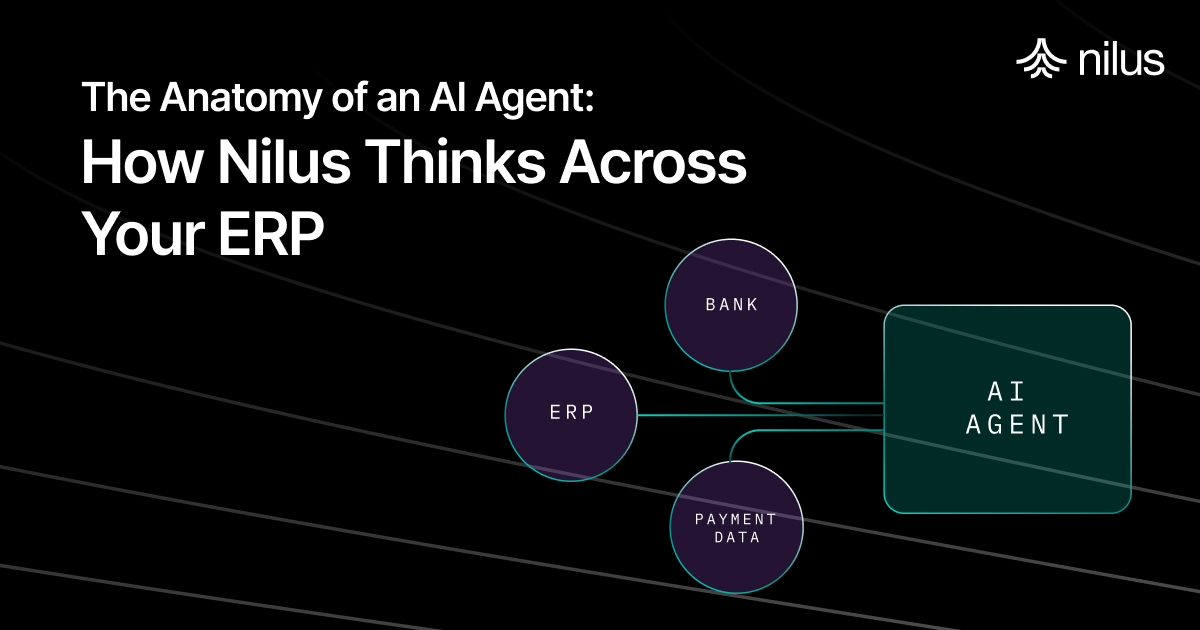
- Reason across systems (banks, ERPs, data warehouses, TMSs)
- Propose actions (cash reallocation, forecast adjustment, payment delay)
- Route for approval
- Execute within policy
- Learn to improve with every cycle
And none of this is theoretical. This architecture is already powering the most advanced treasury teams.
Finance Has Outgrown Workflow-Based Tools
The finance stack grew up on deterministic logic:
If X, then Y. If payment is late, flag invoice. If balance is low, trigger alert.
But modern finance is probabilistic:
Should we hedge now or wait three days? What’s the most capital-efficient move, given liquidity, rates, and risk? Which forecast variant is most reliable, and how do we defend it?
These aren’t questions for dashboards. They’re decisions that require judgment.
Agentic systems are the first to model that judgment in software.
What the Agentic Stack Looks Like
According to the 2025 State of Agentic Finance Stack report (by Mostly metrics), the future architecture looks like this:
- Layered agents, not monolithic apps
- Modular reasoning, not brittle rule trees
- Embedded governance, not reactive compliance
- System-wide coordination, not siloed workflows
The smartest players aren’t rebuilding finance apps. Instead, they’re rethinking how decisions get made.
And the teams that adopt this model early - especially in high-leverage functions like treasury - will move faster, forecast better, and execute with a precision that legacy stacks simply can’t match.
The Treasury Team as AI Control Tower
Nowhere is this shift more visible than in treasury.
Today’s leading platforms are moving from:
- Batch to real-time
- Spreadsheets to agentic simulations
- Human-led monitoring to AI-led orchestration
But they’re not using black-box models or chatbots pretending to be copilots.
These systems are transparent, auditable, policy-bound, and fully controllable, designed for enterprise-grade confidence.
They also don’t require ripping out your stack. Instead, they layer on, coordinate across, and unlock leverage immediately.
It’s Not About a Smarter UI, But a Smarter Core.
If you’re leading finance today, the decision isn’t whether to adopt AI. It’s whether you’re building your operating model around tools or around systems that act.
Agentic finance isn’t a trend. It’s the new standard, and the smartest teams are already making the shift. The rest will be stuck clicking around dashboards while their competitors move money faster, forecast more accurately, and close the books with time to spare.

Written by
Your next treasury move is waiting
Get an ROI assessment, and find out where you’re leaving cash on the table.


Your next treasury move is waiting
Get an ROI assessment, and find out where you’re leaving cash on the table.
More Resources
Your next treasury move is waiting
Get an ROI assessment, and find out
where you’re leaving cash on the table.

